Spotlight: Global precious metals exploration 1
Record precious metal prices are driving global exploration for gold and silver. Here’s a list of four companies to keep an eye on. Another four companies under the global […]
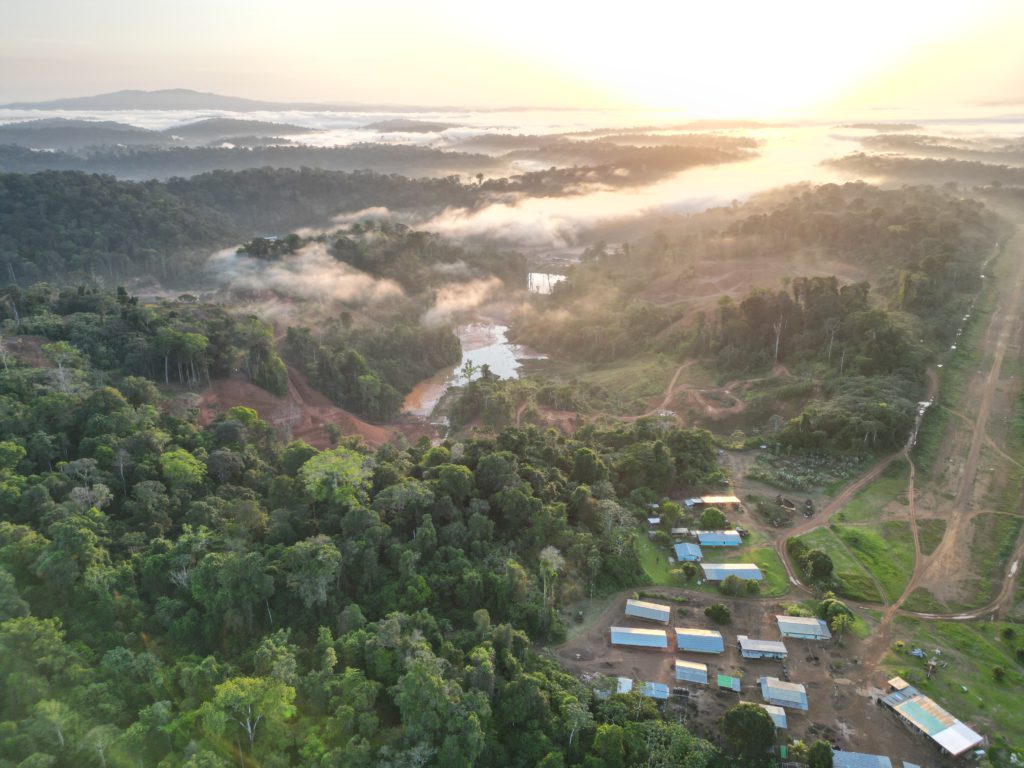
Founders Metals, (TSXV: FDR; US-OTC: FDMIF) one of the most advanced gold explorers in Suriname, heads into the new year backed by Gold Fields (NYSE, JSE: GFI) and with more exploration planned at its Antino project on a land package that has almost tripled in size.
Founders plans to use the $50 million (US$68.9 million) Gold Fields invested last November for a 12% stake in the explorer to drill more than 60,000 metres at Antino this year.
“For 2026 [the] focus is on exploration and this collaborative effort with Gold Fields,” Founders CEO Colin Padget told The Northern Miner in a December interview. “We have a secondment agreement to identify technical people that would be of help to us, to move this forward as efficiently as we can and really look to find more of these multi-million-ounce size gold deposits.”
Founders’ plans in the coming months further set Antino apart as one of the most advanced, extensively drilled and geologically prospective projects in Suriname, itself under-explored compared with neighbouring Guyana. In addition to the support from Gold Fields, Founders is emerging from a year when B2Gold (TSX: BTO) raised its stake in Founders to 6%, with the option of gaining up to 9.9%.
Located 275 km south of the Suriname capital, Paramaribo, Antino sits across the Lawa River from French Guiana. The property has produced 500,000 oz. of artisanal gold historically. The project also sits on the Guiana Shield, which extends to neighbouring South American countries and hosts Newmont’s (TSX: NGT) Merian and Zijin Mining’s Rosebel gold mines in Suriname.
Founders’ shares gained 3% to $4.58 apiece as press time neared in Toronto, for a market capitalization of $524 million. The stock has traded in a 12-month range of $2.53 to $6.25.
A key goal for this year is folding a new 360-sq.-km land package west of Antino into the project, after Founders in November acquired it and a geological data set from a private local company for $5 million. The deal nearly tripled Founders’ concession from the initial 200-sq.-km that comprised Antino.
“We’re taking the geophysics and the geochemistry studies, work that we have ongoing on the original land package and we’re expanding that to all of it,” Padget said. “That gives us that foundation for building targets or building a target pipeline. We’re going to be very aggressive in the new year on expanding into that to the northwest of Upper Antino.”
The accompanying data in the new property includes high-grade results from auger drilling – used for shallow targets – and other impressive anomalies, Padget said.
The project comprises several targets including, Buese, Lower Antino and Upper Antino, its key target where Founders has drilled more than 50,000 metres since 2023. Last year the company discovered the new targets Maria Geralda and Van Gogh.
Founders has already been running regional-scale geophysical surveys across the entire property and will layer geochemistry work on top of that. The financing from Gold Fields is aimed at exploration based on those surveys, Padget said.
“They have the potential to generate a lot of new targets,” he said. “[We’ll] put a lot of dollars into the surface exploration piece, and then following up and being as aggressive as we possibly can be over the next 12 months, in particular with the drilling of those targets that come out of that program.”
The deal with Gold Fields, which in 2024 acquired Osisko Mining and its Windfall project in Quebec, marks the South African miner’s first foray into the Guiana Shield that stretches under northeast South America.
A strong tailwind that’s pushing Founders along is its advancement in a country that has little mining and development relative to its size. Most of its 164,000 sq. km landmass is covered in forest and Suriname’s population is only 633,000.
There are only two producing gold mines in the country: Rosebel and Merian, and among the handful of exploration companies, Founders leads the pack by metres drilled, depth, thickness of intervals and grades, and institutional support by larger companies.
Its closest peers are Sranan Gold (CSE: SRAN) and its Tapanahony project, Miata Metals’ (CSE: MMET) Sela Creek and Greenheart Gold’s (TSXV: GHRT; US-OTC: GHRTF) Majorodam.
But Founders has drilled tens of thousands more metres at Antino than its associates, and Founders has drawn large investments from senior producers while its peers have mostly done private and public placements.
“We have first-mover advantage relative to those guys,” Padget said. “We had some excellent success from early days, and then continuing from there. We are substantially further along the exploration curve when it comes to at least the original 20,000-hectare concession.”
However, none of those explorers have yet published initial resources or economic studies. For Founders, such studies aren’t quite on the horizon yet and in the coming months exploration will target the expanded concession area.
“We’re first going to focus quite strongly at the beginning of the year on seeing what that potential is for northwest expansion,” Padget said. “Once we understand that, then we put a timeline in place around a potential resource for Upper Antino. Continually looking for more Upper Antinos is really the message at the moment.”
Meanwhile, the Surinamese government is in the midst of revising its mining laws, which haven’t been amended in decades. The reforms are aimed at clarifying environmental regulations, community and Indigenous rights and artisanal mining.
Similar mining law revision efforts elsewhere in the world – such as the Sahel region of Africa – have given headaches to miners, particularly Barrick Mining (TSX: ABX; NYSE: B) in Mali and Endeavour Mining (LSE: EDV; TSX: EDV; US-OTC: EDVMF) in Burkina Faso.
But Padget regards Paramaribo’s legal reforms as a positive move. For one thing, mineral rights agreements will be set in law, instead of writing up deals as one-offs with miners.
“This is for new explorers, new people who want to come into the country as an investor, they can understand ahead of time [and] know exactly what those royalty regimes, what the tax regime is going to look like.”
Padget also noted the relative speed at which G Mining Ventures (TSX: GMIN; US-OTC: GMINF)’s permits moved for its Oko West project in Guyana.
“That’s all moved very quickly. Suriname is looking to advance things in a very similar pace.”