Spotlight: Global precious metals exploration 1
Record precious metal prices are driving global exploration for gold and silver. Here’s a list of four companies to keep an eye on. Another four companies under the global […]
Lynas Rare Earths (ASX: LYC), Energy Fuels (TSX: EFR; NYSE: UUUU) and MP Materials (NYSE: MP) are among Western companies chipping away at China’s enormous lead in rare earths.
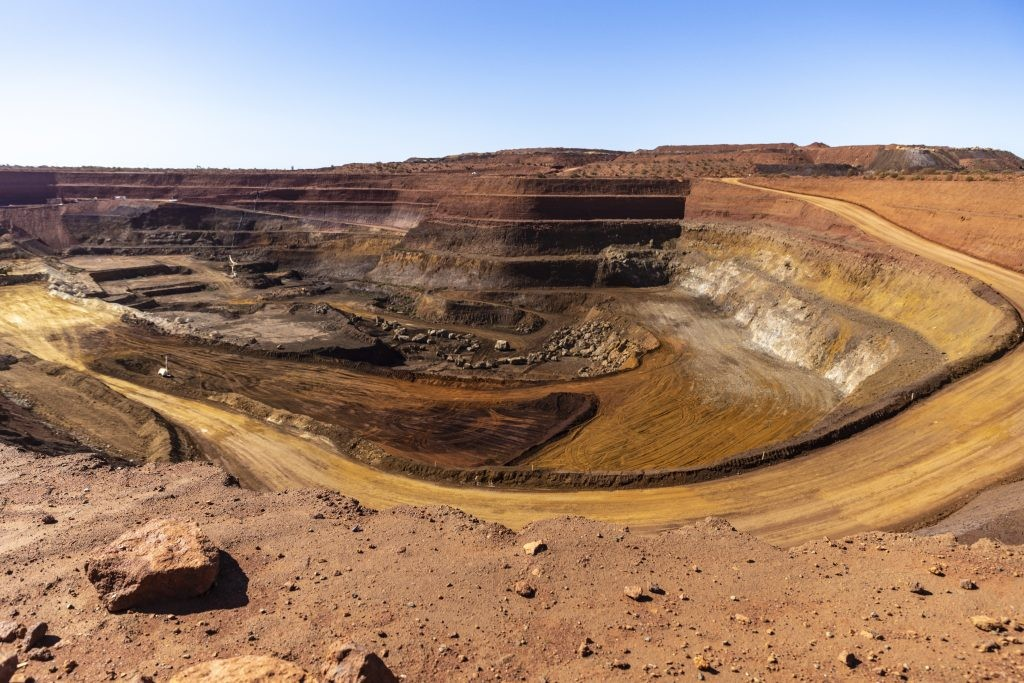
Leading the charge is the Lynas Mt Weld mine in Western Australia and its Malaysian processing plant, the largest producer of separated rare earths outside China. Energy Fuels’ White Mesa mill in Utah could be the first in North America to produce light and heavy separated rare earths at commercial scale. It might even surpass output from MP Materials, the continent’s only producer.
China’s recent threats to curb exports to Japan and the United States highlight the plight of the West which needs the hard-to-produce metals for everything from cell phones to fighter jets. The Asian giant took on rare earths as a strategic goal 60 years ago as Western nations let go their grip on the dirty process.
Now, as superpowers turn mining into a new Cold War, the U.S. is scrambling to catch up by threatening a Greenland takeover of sorts and buying an equity stake in MP Materials, its largest producer.
“Trade uncertainties reinforce the importance of protecting current functioning outside China supply chains and investing in the supply chain,” a Lynas spokesperson told The Northern Miner by email. “Lynas plays an important role in this as the only outside China commercial producer of both separated light and heavy rare earth oxides today.”
Beijing’s threats last month against Japan echo those in 2010, which had spurred Tokyo to begin exploring alternate sources of rare earths, leading to Lynas. Japanese conglomerate Sojitz and government mineral agency Jogmec signed a $250-million agreement for long-term supply of rare earths.
That deal and others helped Japan lessen its reliance on Chinese rare earths to 60-70% today from 90% in 2010, according to Jogmec data cited by The New York Times.
Lynas started mining in 2011 at Mt Weld, estimated to contain 2 million tonnes of total rare earth oxides in reserves. Its processing facility in Kuantan, Malaysia began output of separated light rare earths in 2013, eventually ramping up to annual capacity of 5,500 to 6,000 tonnes. Lynas produced 10,908 tonnes of light rare earth oxides in 2024, for 5,655 tonnes of separated neodymium-praseodymium (NdPr), company figures show.
The company reached its heavy rare earth commercial production milestone last May at annual capacity of 1,500 tonnes. Heavy rare earths include samarium, gadolinium, dysprosium and terbium and are used in wind turbines, electronics and defense applications.
Lynas announced plans in October to build a new separation plant in Malaysia with annual output capacity of 5,000 tonnes of heavy rare earths. The company expects to begin producing samarium this April, with full throughput targeted for 2027-2028.
However, this production is only a tiny fraction what analysts say the West needs. Western producers currently make about 7,000 tonnes annually of separated rare earths, including Lynas’ output and around 1,300 tonnes from MP Materials. But an analysis from McKinsey suggests Western demand could reach 50,000 to 70,000 tonnes annually by the mid-2030s. Despite the accelerated efforts to build up rare earth mining and processing capacity in recent years, the task of trying to match China is massive.
The Asian country produced 270,000 tonnes of rare earth oxides in 2024, according to U.S. Geological Survey figures. That’s more than four times the combined total in 2024 from the main Western rare earths producers of the U.S. (45,000 tonnes), Australia (13,000 tonnes) and Brazil (20 tonnes).
While not as advanced as Lynas, Energy Fuels’ White Mesa mill in southeast Utah might be able to produce a comparable amount of separated rare earths after its stage two circuit expansion is commissioned in 2029, according to a feasibility study released on Jan. 15.
Currently the only operating conventional uranium mill in the United States, White Mesa is also the country’s sole facility that can process light rare earths at commercial scale, and heavy rare earths at pilot scale. The circuit expansion could boost capacity six-fold to 6,000 tonnes per year of separated NdPr and about 300 tonnes of heavy elements dysprosium (Dy) and terbium (Tb).
White Mesa would source rare earths mined at its Vara Mada project in Madagascar, and third party sites such as Astron’s (ASX: ATR) Donald project in Australia’s Victoria state and Chemours’ (NYSE: CC) projects in Florida and Georgia.
“Energy Fuels has a very clear pathway to becoming a tier one, global producer of rare earth oxides on par with Lynas, which is of course the current global leader in the ex-China rare earth industry,” Curtis Moore, senior vice-president of marketing and corporate development told The Northern Miner in emailed comments.
The company gained further momentum when it signed a $299-million deal on Jan. 20 to acquire Australian Strategic Materials (ASX: ASM) and its rare earths processing sites in South Korea and Australia.
The mill expansion’s economics stand out as well. At an 8% discount rate, the stage two circuit would have a post-tax net present value (NPV) of $1.9 billion and an after-tax internal rate of return (IRR) of 33%, at initial capital costs of $410 million. The NPV almost doubles to $3.7 billion if the circuit expansion is combined with the $1.8 billion NPV for Vara Mada.
White Mesa’s costs come in at the low end for facilities of its size. Iluka Resources’ (ASX: ILU) Eneabba plant in Western Australia – currently under construction – has a similar capacity to White Mesa. It could produce up to 5,500 tonnes annually of light rare earths and 725 tonnes of heavy rare earths. But Eneabba’s estimated costs – at A$1.7 billion – are more than double White Mesa’s. Iluka targets commissioning and production at Enneabba in 2027.
The proposed Utah mill project also benefits from it being an expansion on an already operational, multi-commodity facility, while Eneabba would be a new plant designed only for processing rare earths.
By contrast, White Mesa could exceed the output of North America’s only rare earths mine, MP Materials’ Mountain Pass mine in California, while also processing heavy rare earths.
Mountain Pass produced 45,455 tonnes of rare earth oxide concentrates in 2024 for 1,294 tonnes of separated NdPr oxide. However, Mountain Pass doesn’t produce commercial scale separated heavy rare earths.
Still, the California miner is riding tailwinds from a 10-year off-take agreement it signed last August with the Department of Defense. It gives the government a 15% stake in MP Materials and sets a price floor of $110 per kg for NdPr materials. The company also made a $500-million deal in July with Apple (Nasdaq: AAPL) for domestic supplies of rare earths for smartphones and electric vehicles.
In the wider Western world, Brazil stands to emerge as the next rare earths “powerhouse”, according to analysis from BMI last October.
Brazil hosts Latin America’s sole rare earths mine: Serra Verde’s Pela Ema project in Goiás state, as well as enormous reserves of the elements, a pipeline of advanced projects and international partnerships.
Since the private miner started commercial production in early 2024, Pela Ema has annual capacity of 5,000 tonnes of light and heavy rare earths over a 25-year life. It plans to ramp up to 6,500 tonnes by early 2027.
Serra Verde has drawn significant financing from U.S. government agencies, including up to $465 million from the U.S. International Development Finance Corporation in November for operational upgrades at Pela Ema; and $150 million in 2024 from the Minerals Security Partnership to boost efficiency at the mine.
In neighbouring Minas Gerais state, Meteoric Resources’ (ASX: MEI) is developing the Caldeira project that sits on the largest ionic adsorption clay rare earths deposit outside China. Caldeira holds 103 million tonnes in probable reserves grading 4,091 parts per million (ppm) total rare earth oxides (TREO) for 421,000 tonnes of TREO, according to a pre-feasibility study from July.
At a post-tax NPV of $1.3 billion and an IRR of 39%, Caldeira could produce 103 million tonnes of rare earths over a 20-year life.
With a feasibility study on the radar possibly for this year, Meteoric is targeting mine construction in late 2026 and first production in 2028.
China’s lead is bolstered by its decades of state-led investment into the rare earths space, starting in 1964 when Deng Xiaoping, who later became China’s top leader, inspected a mine that held the world’s largest deposit of the elements, according to The New York Times.
Deng declared China had to develop steel along with rare earths. In the next two decades, he led efforts to discover the military uses of rare earths, which eventually helped Chinese chemists find ways to affordably separate rare earths into their individual elements.
After Deng drafted a five-year production plan for rare earths in 1981, it spurred more than 100 towns and villages across China to build rare-earth refineries, many of them state-owned. By 1986, China was the world’s top producer of rare earths.
The Lynas spokesperson noted that Western countries have abundant rare earth resources, and Mt Weld and Mountain Pass have about 50 years of mine life combined. But the big hurdle to clear is making the processing bottleneck more affordable and practical.
“The separation of rare earth elements is technically complex,” the spokesperson said. “And Lynas has built environmentally responsible, in-house rare earths processing expertise over the past 13 years that we have been in production.”