Treasure Hunt: Saskatchewan Potash – The buried treasure that fed the world
For the latest clue, read the article below; voici la version française. And watch the video: English | French Long before Saskatchewan […]
Continuing price volatility with rare earths and copper, high costs, disputes over consultation and executive shakeups have some major projects facing uncertainty heading into the new year. Here are three projects to watch:
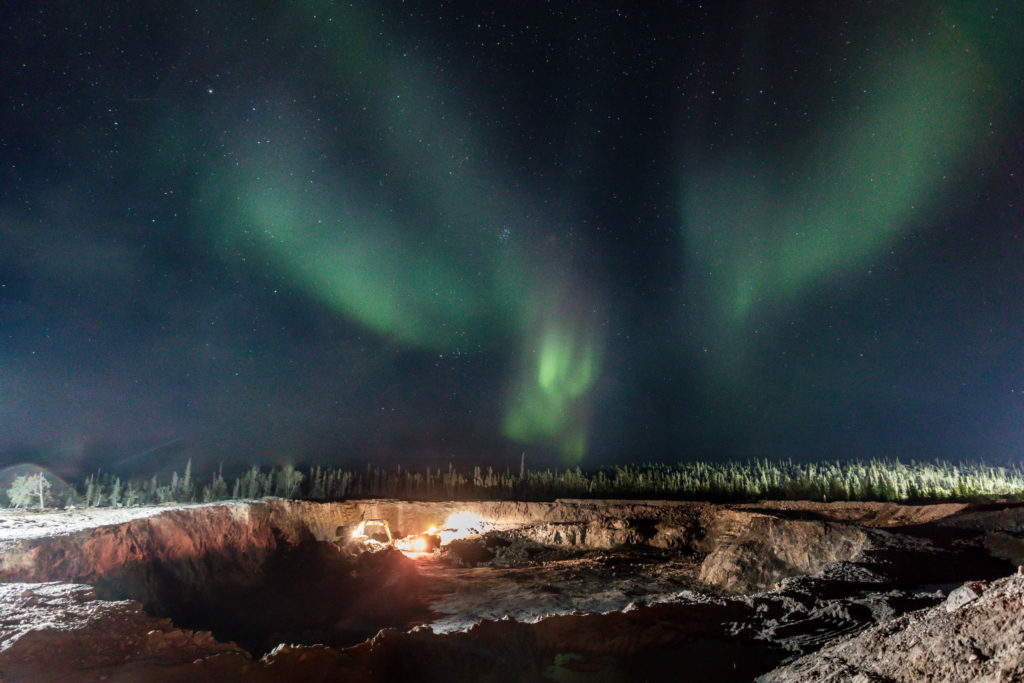
Vital Metals’ (ASX: VML; US-OTC: VTFMXF) Nechalacho rare earths and niobium project in the Northwest Territories faces some challenges ahead of a prefeasibility study due in early 2026.
In early October, the Yellowknives Dene First Nation raised concerns over lack of consultation prior to U.S. government investment. In September, the Nechalacho camp was devastated by a wildfire that tore through empty cabins but spared some critical equipment.
Nechalacho is one of Canada’s more advanced rare earths projects. The company plans to use a novel method to treat raw material: solely by ore sorting. In January, the company updated the resource for the Tardiff deposit, adding 56% to its tonnage and including niobium.
The project is envisioned as a hard rock open pit mine producing neodymium (Nd), praseodymium (Pr), terbium and dysprosium. Over an 11-year mine life, Vital anticipates an average output of 56,000 tonnes of concentrate per year grading 26.4% total rare earth oxide (TREO) and 3.3% niobium pentoxide.
Tardiff hosts 192.7 million tonnes at 1.3% TREO, containing 2.5 million tonnes TREO, including more than 636,000 tonnes NdPr, plus a 578,000-tonne niobium (Nb2O5) resource, according to the January update.
Vital Metals forecasts a post-tax net present value (NPV) of $445 million (C$628 million) at an 8% discount rate and a 26% internal rate of return (IRR). Capital costs for Tardiff are estimated at $291 million, with operating costs pinned at $24 per tonne mined, with payback within four years.
Post-tax free cash flow is estimated at $445 million based on per kilogram rare earth prices of $90 Pr6O11, $90 Nd2O3, $1,322 Tb4O7, and $338 Dy2O3, a break-even price of $33.68 NdPR, and assumes niobium isn’t payable.
The company is a founding member of the Canadian Rare Earth Supply Chain Consortium.
Vital Metals has a market capitalization of C$36.2 million.
Arafura Rare Earths (ASX: ARU) is seeking further investment in its Nolans NdPr rare earths project in Australia’s Northern Territory. As the country’s first ore-to-oxide rare earths operation, Nolans consists of a mine and a processing plant 8.5 km to the south.
In August, Arafura received A$100 million (C$91.5 million) from Export Finance Australia, bringing public funding for Nolans to more than A$1 billion. The country’s National Reconstruction Fund committed A$200 million in January after previous investment of A$840 million. International loans tally about US$1 billion.
The company has also sought up to €100 million (C$163 million) from the German Raw Materials Fund, leveraging the G7 Critical Minerals Action Plan, the Mineral Security Partnership, and the European Union’s Critical Raw Materials Act.
Located 135 km north of Alice Springs, the Nolans Bore deposit hosts rare earths, phosphate, uranium and thorium and is expected to produce about 4% of the world’s NdPr. Nolans hosts phosphate minerals apatite and monazite and the silicate mineral allanite.
Over a 38-year mine life, Nolans could produce 4,440 tonnes of NdPr oxide annually, according to a 2019 feasibility study. It’s also aiming for 144,000 tonnes annually of fertilizer-grade phosphoric acid at its extraction plant.
A resource from 2017 shows Nolans hosting 29.5 million proven and probable tonnes grading 2.9% TREO, 13% phosphate (P2O5), with 26.4% of the rare earths as NdPr. The site has 56 million measured, indicated and inferred tonnes grading 2.6% TREO, 11% phosphate, and 26.4% NdPr distribution, according to the resource.
The project has a post-tax NPV at an 8% discount rate of US$1.7 billion and an IRR of 17%, with net capital costs pegged at US$1.2 billion. Operating costs would be about A$43.70 per kg NdPr and A$28.6 per kg NdPr net of the phosphoric acid by-product credit. It assumes a base case price for NdPr of US$133 per kg over the mine life.
Average annual revenue would be $610 million from rare earths and $79 million from phosphoric acid sales. After-tax free cash flow would be $10.2 billion based on metal prices of US$133 per kilogram NdPr Oxide over life-of-mine and US$104 per kilogram NdPr Oxide during the off-take period.
Arafura Rare Earths has a market capitalization of A$736 million (C$672 million).
Barrick Mining (TSX: ABX; NYSE: B) continues to pursue financing for the $5.5-billion capital cost first stage of the Reko Diq copper and gold project in Pakistan amid uncertainty over the company’s future.
Since the resignation of CEO Mark Bristow in September, Chief Operating Officer Mark Hill also has been serving as interim president and CEO. The company has sold some gold assets and is embroiled in a legal case at the World Bank over Mali’s seizure of the Loulo-Gounkoto mine.
Barrick is looking to close as much as $3 billion in financing for Reko Diq next year and start engineering and infrastructure building. The project secured $700 million in June from several international banks and state lenders including the United States, Canada, Germany, Sweden and Finland. The goal is a 50/50 debt-equity structure, Bristow told The Northern Miner in an interview in September.
Reko Diq is half-owned by Barrick and the rest split between the governments of Pakistan and its Balochistan province. On a 100%-basis, the project hosts 3.93 billion measured and indicated tonnes grading 0.43% copper and 0.25 gram gold per tonne for 17 million tonnes contained copper and 29 million oz. gold, according to a technical report released in February. The project has 1.38 billion inferred tonnes at 0.3% copper and 0.2 gram gold for 4.5 million tonnes copper and 7.8 million oz. gold.
Proven and probable reserves total 3.01 billion tonnes grading 0.48% copper and 0.28 gram gold per tonne for 15 million tonnes of contained copper and 26 million oz. of gold, supporting an initial mine life of about 37 years.
Production is expected to start by the end of 2028. Barrick forecasts a post-tax NPV of $13 billion (at an 8% discount rate) with an IRR of 21% and a payback period of just over six years, according to the update. Free cash flow is pinned at $70.2 billion over the 37-year life of mine, assuming long-term prices of copper at $4.03 per lb. and gold at $2,045 per ounce.
A second-stage expansion is forecast to cost $3.5 billion, while sustaining capital spread across the mine life would be $3.8 billion.
Annual output is expected to average between 200,000 and 300,000 tonnes of copper once steady-state production is reached.
While Barrick hasn’t disclosed an official gold production forecast for Reko Diq, the 2024 feasibility study’s reserve data allow for a reasonable estimate of 250,000 oz. to 400,000 oz. per year. That’s based on average annual throughput of 73 million tonnes and typical gold recoveries of 35% to 65% for porphyry copper-gold systems.
Operation costs are $57.5 billion over the mine’s life, with stage one assuming an operating cost of $25.43 per tonne to reach an annual ore production of 45 million tonnes, and stage two assuming a cost of $18.58 per tonne to reach a production of 90 million tonnes per year.
Barrick Mining has a market capitalization of C$78.4 billion.