Treasure Hunt: Saskatchewan Potash – The buried treasure that fed the world
For the latest clue, read the article below; voici la version française. And watch the video: English | French Long before Saskatchewan […]
Record precious metal prices are driving global exploration for gold and silver. Here’s a list of four companies to keep an eye on. Another four companies under the global precious metals exploration banner are to follow in a separate posting.
AbraSilver Resource (TSXV: ABRA; US-OTC: ABBRF) plans to complete a feasibility study in this year’s first half for its Diablillos silver-gold project in northwestern Argentina.
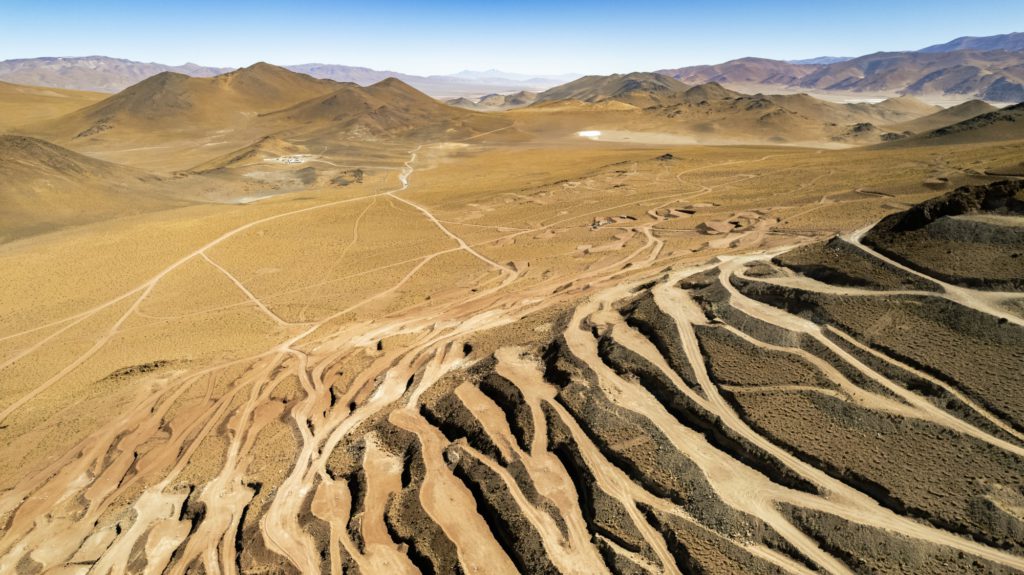
Located in the Puna region, about 160 km southwest of the city of Salta and 1,450 km northwest of the capital Buenos Aires, Diablillos is one of the more advanced undeveloped silver-gold projects in South America, with year-round road access and nearby power infrastructure.
AbraSilver has completed more than 130,000 metres of drilling since it bought the property, which includes 15 contiguous and overlapping mineral concessions, in 2016. The open-pit project hosts 104 million measured and indicated tonnes grading 59.5 grams silver per tonne and 0.51 gram gold per tonne for 199 million oz. contained silver and 1.72 million oz. gold, according to an update from last July. Inferred resources add 19.6 million tonnes at 21 grams silver and 0.38 gram gold for 13.4 million oz. silver and 241,000 oz. gold.
Drilling to the east of the conceptual open-pit resource last October returned a series of high-grade intercepts. Highlights from Oculto East include 8.5 metres of 13.81 grams gold and 14.3 grams silver from 337 metres depth in drillhole DDH 25-077, and a separate interval of 44 metres of 0.65 gram gold and 3.6 grams silver starting at 368 metres.
Other highlights included hole DDH 25-073, which cut 10 metres grading 59 grams silver from 117 metres downhole and 20 metres grading 0.66 gram gold from 223 metres depth. Hole 25-076 returned 12 metres grading 62 grams silver from 128 metres downhole and 180 metres grading 10.8 grams silver from 170 metres depth.
In addition to the oxide-focused drilling, AbraSilver is exploring a porphyry target, Cerro Blanco, about 4 km northeast of Oculto. Initial drill results in November included 128 metres grading 0.24 gram gold from surface in DDH 25-050 and 200 metres of 0.32 gram gold from surface in DDH 25-066, including 11 metres of 0.33 gram gold and 0.46% copper from 49 metres downhole.
Elsewhere in Argentina, AbraSilver has an earn-in option and joint-venture agreement with Teck Resources (TSX: Teck.A/Teck B; NYSE: TECK) on the La Coipita gold-copper-molybdenum project in San Juan province.
AbraSilver Resource has a market cap of about $2.2 billion (US$1.61 billion).
Cabral Gold (TSXV: CBR; US-OTC: CBGZF) plans to start producing gold in the fourth quarter from a starter pit at its Cuiú Cuiú project in northern Brazil, about 2,500 km north of Rio de Janeiro.
An updated prefeasibility study last year envisioned mining near-surface-oxide material from three deposits – Moreira Gomes (MG), Machichie and Central. The Central and MG pits are situated about 5 km apart and Machichie lies about 500 metres from the run-of-mine pad.
The study estimated a mine life of 6.2 years producing an average of 18,500 oz. gold a year at an all-in sustaining cost (AISC) of $1,210 per ounce. The process plant would run at a capacity of 3,000 tonnes per day.
At a base case gold price of $2,500 per oz., the project generates an after-tax net present value (NPV) (at a 5% discount rate) of $73.9 million and an internal rate of return (IRR) of 78%. Initial capital of $37.7 million could be repaid in eight months.
The study was based on the project’s indicated resources of 13.6 million tonnes grading 0.5 gram gold. The project also contains 6.4 million inferred tonnes grading 0.34 gram gold.
The estimate excludes mineralization in the underlying primary or hard rock material, which makes up about 80% of the project’s total resource.
Exploration last year discovered new areas of gold. Drilling in October at the Pau de Merena (PDM) target, 2.5 km northwest of the Central deposit, returned 23.3 metres of 4.7 grams gold from 57 metres depth in hard rock below the gold-in-oxide blanket. The drill hole, DDH346, also intersected 1 metre of 91.3 grams gold from 57 metres and 1 metre of 8.1 grams gold from 73 metres.
In December, the company identified a new mineralized structure connecting the Central deposit to PDM. Drilling 1.3 km northwest of the Central deposit and 500 metres southeast of the PDM target returned intercepts of 8 metres grading 1.32 grams gold from 43 metres downhole in RC0602 and 13 metres averaging 0.83 gram gold from 11 metres depth in RCO604.
Cuiú Cuiú is located about 25 km northwest of G Mining Ventures’ (TSX: GMIN; US-OTC: GMINF) Tocantinzinho project in the Tapajos gold province of Pará state.
Cabral Gold has a market cap of about C$209 million.
Chesapeake Gold (TSXV: CKG; US-OTC: CHPGF) is focused on its Metates open-pit gold and silver project in Mexico’s Durango state, about 920 km northwest of Mexico City. It plans to release a prefeasibility study for the project this year.
An updated preliminary economic assessment (PEA) in 2021 evaluated the first stage of a low-cost, scalable sulphide heap leach operation. The study envisioned a mine life of 15 years producing 110,000 oz. gold and 2.5 million oz. silver a year at an all-in sustaining cost (AISC) of $748 per gold ounce.
At a base case price of $1,600 per oz. gold and $22 per oz. silver, Metates delivered an after-tax NPV (at a 5% discount rate) of $682 million and an IRR of 41%.
Initial capital of $359 million, including a $64-million contingency, can be repaid in 2.5 years.
The PEA forecast early cash flow generation, which would support future expansions to potentially take advantage of the entire resource. Average annual pre-tax free cash flow was pegged at $113 million in the first 15 years for a total of $2.7 billion over the mine life.
The PEA focused only on the higher grade intrusive-hosted portion of the Metates orebody, which represents less than 20% of the total resource.
The resource is broadly divided into intrusive hosted and sediment hosted mineralization. About 80% of the measured and indicated resource is sediment hosted and the remaining 20% is intrusive hosted.
Metates holds measured and indicated resources of 921.2 million tonnes grading 0.57 gram gold and 14.3 grams silver for 16.7 million contained oz. gold and 423.2 million oz. silver. Inferred resources add 139.5 million tonnes at 0.47 gram gold and 13.2 grams silver for 2.1 million oz. gold and 59 million oz. silver.
In September 2021, Chesapeake said it cracked the code at Metates to undertake the heap leach processing of sulphide material that could disrupt and enhance the project economics of sulphide ore bodies around the world.
Last December, Chesapeake Gold sold its Tatatila gold-copper project in Veracruz to Mexican Gold Mining (TSXV: MEX; US-OTC: MEXGF) for a 14.9% stake in Mexican Gold and a 1.5% net smelter return royalty. Tatatila surrounds Mexican Gold’s Las Minas project.
Chesapeake Gold has a market cap of about C$275.3 million.
Discovery Silver (TSX: DSV; US-OTC: DSVSF) became a new Canadian gold producer last year with its acquisition from Newmont Mining (TSX: NGT; NYSE: NEM) of the Porcupine complex near Timmins, Ont.
Porcupine has produced about 70 million oz. gold since 1910. The assets include Hoyle Pond, one of North America’s highest-grade gold mines, which has produced over 4 million oz. since 1987; Borden, a relatively new mine at the centre of a 1,000-sq.-km land position with exploration upside; Pamour, an open-pit project that recently started production; and the Dome mine and mill.
The company estimates the Porcupine mines will produce an average of more than 285,000 oz. gold a year during the next decade, with total production extending to 2046.
The company is also advancing its main Cordero project in Mexico’s Chihuahua state. Since acquiring the project in 2019, the company has drilled more than 310,000 metres and outlined one of the world’s largest silver development projects based on reserves.
Cordero hosts proven and probable reserves of 327 million tonnes grading 29 grams silver, 0.08 gram gold, 0.41% lead and 0.72% zinc. That translates into contained metal of 302 million oz. silver, 840,000 oz. gold 2.9 billion lb. lead and 5.1 billion lb. zinc.
A feasibility study released in February 2024 outlined an open-pit mine life of 19 years producing 15.2 million oz. silver per year, 13,800 oz. gold, 150 million lb. lead and 230.5 million lb. zinc in years one to 12. AISCs come to $13.47 per silver-equivalent ounce.
Initial capex of $606 million could be repaid in 5.2 years, and the study put Cordero’s after-tax NPV (at a 5% discount rate) at $1.8 billion and IRR at 22%.
Cordero is located about 35 km north of the mining town of Parral, which was built around a silver discovery in the 1600s and is home to a mining university and abundant skilled labour. The project is just off a main highway, with a power line running along one side of the project. Chihuahua is the second-largest silver producing state in the country.
Discovery Silver has a market cap of about C$8.2 billion.